

Our Services
Section 179D
Federal tax deductions for building owners and design firms
based on energy efficient building design

Highlights
- Comprehensive Documentation that stands up to IRS scrutiny
- Simple Fixed Fee Structure
- Subject Matter Experts work directly with you and your tax professionals to quantify and substantiate 179D deductions
- Expert Team includes Engineers, Tax Attorneys, CPAs, IRS Enrolled Agents, LEED APs
- 17,000 + studies completed throughout the country, even Guam
- Over $1 Billion in Federal 179D Tax Deductions Processed
- 179D studies completed on over 1.5 billion square feet of building space
Energy Tax Savers is the first green tax firm, we help our clients achieve federal tax incentives aimed at making energy efficient investment as economically viable as possible. We know how to apply the tax law to make building energy efficiency even more profitable.
We represent many of the nation’s leading retailers, warehouse owners, aerospace companies, industrial manufacturers, financial service firms and car dealers. We also represent numerous architecture, engineering, ESCOs, design & build firms, and lighting designers.

We have participated in a collaborations including the MLB and New York Yankees to enhance human life while saving energy and reducing the carbon footprint.
Our firm also collaborated with former NHL star Mike Richter, current President of Brightcore Energy, to bring energy efficiency to the National Hockey League.
Section 179D Overview
The Section 179D Deduction (“EPAct 179D”) was enacted creating immediate tax savings for building owners and design firms based on the use of energy efficient building design such as lighting, HVAC, building envelope, and building controls.
- Projects completed between January 2006 – present are eligible
- Both new construction or building retrofits can benefit from the EPAct Section 179D deduction
- The Section 179D Deduction can now be taken multiple times during a building’s lifetime

Recent Updates Under the Inflation Reduction Act
In 2022, The Inflation Reduction Act (IRA) was signed into law which has significantly expanded Section 179D tax savings opportunities.
- The Section 179D Deduction can be taken multiple times in a project’s lifetime
- The available tax deduction has increased to over $5.00 per square foot
- 179D Deductions now available for tribal government and non-profit buildings

The value of the Federal tax deduction is based on project square footage
For projects placed in service in 2022 or prior:
EPAct provides a deduction of up to $1.88 per square foot for the installation of systems that reduce energy and power consumption by 50% in comparison to a standard building (ASHRAE Standard 90.1)
For projects placed in service in 2023 or later:
EPAct provides a maximum potential tax deduction of up to $5.81 per square foot for installation of systems that reduce energy and power consumption by 25% in comparison to a standard building (ASHRAE Standard 90.1)

Who Qualifies for the 179D Tax Deduction?
Building Owners & Developers
Commercial building owners can obtain 179D tax deductions for their energy efficiency projects dating back to 2006. Eligible building types include:
Industrial
Parking Garages
Retail
Office
Hotel
Hospital
Apartments (4 stories or greater)
Distribution Centers & Warehouses
Sports Arenas & Gyms
Designers
In addition to building owners, the Section 179D deduction can also be claimed by primary designers such as architects, engineers, and contractors for public, government, and nonprofit buildings. Examples of these eligible building types include:
Federal Government Buildings – Military Bases, Courthouses, Post Offices, Labs, Offices
State Government Buildings – Public Universities, Courthouses, Offices, Hospitals, Airports
Municipal Government Buildings – K-12 Public Schools, Town Halls, Police and Fire Stations, Libraries
Non-profit Buildings – Private Schools and Universities, Hospitals, Religious Institutions, Museums, Community Centers
Tribal Governments – Community Centers, Police and Fire Stations, Hospitals, Schools, Hospitality
What is a Designer?
Per IRS Notice 2008-40, a designer is “a person that creates the technical specifications for installation” of lighting, HVAC, or building envelope in a building owned by a government or specified tax-exempt entity.
A designer may be any of the following, if eligible activities are performed:
Architect
Engineer
Contractor
Environmental Consultant
Energy Services Provider
In the case of buildings owned by governments and tax-exempt entities, the owner of the building may allocate the Section 179D deduction to the designer or designer(s).
In addition to energy projects completed in the current tax year, designers can typically claim Section 179D deductions for projects completed in the preceding three years.
How to Qualify for the Tax Deduction
Eligible projects include installations related to lighting, HVAC, building envelope, and building controls.
The process of qualifying projects for the EPAct Section 179D deductions requires a detailed engineering analysis of building energy usage.
Our tax experts and engineers perform in-depth energy modeling and energy use intensity (EUI) calculations.
We leverage DOE approved modeling software to simulate building energy consumption and evaluate the project against threshold requirements for efficiency.
Prevailing Wage & Apprenticeship Requirements
Increased 179D deduction levels are available for projects that satisfy prevailing wage and apprenticeship requirements during construction. These requirements are generally based on those set forth in Section 45 of the tax code and are applied to other sections, including Section 179D.

Typically Eligible Projects
- Lighting Installation
- Roof Installation
- Window Installation
- Lighting or HVAC Controls Installation
- HVAC Installation
- Geothermal (Ground Source Heat Pumps)
- High Efficiency Water Source Heat Pumps
- Thermal Storage
- High Efficiency VRF Units in Rental Apartments/Dorms/Hotels
- Centralized HVAC in Rental Apartments/Dorms/Hotels
- Energy Recovery Ventilation
- Demand Control Ventilation
- VFD’s on All Major Motors and Compressors
- Chillers in Buildings < 150,000 sq ft
- Direct Fired Heaters in No AC Industrial Spaces
- Industrial Space > 75,000 sq. ft. with Constant Volume Package Unit
- VAV (variable air volume devices) in Buildings < 75,000 sq. ft.
- Chilled Beam
- Gas Fired Chillers Combined with Electric Chillers to Peak Shave
- Combined Heat and Power
Our Value Added Deliverables
- Complimentary 179D Estimate
- Turn-Key Review & Analysis
- Simple, Fixed Fee Structure
- All necessary tax forms and guidance for Section 179D filing
- Comprehensive Study to substantiate the tax deductions and eligible projects
- Audit Support
- Reports from DOE Approved Software
Our team provides unparalleled expertise in order to substantiate the maximum Section 179D deductions and ensure its defense. We perform complimentary assessments to estimate your project’s tax deduction as well as provide you with a fixed fee quote.
179D Tax Deduction Insights


Section 179D Frequently Asked Questions
Answers to common questions about Section 179D tax deductions such as qualifying building technologies and tax deduction levels.
Case Studies
Section 179D success stories that highlight the tax deductions awarded for various building types.
Featured 179D Publications
Explore our publications and articles on how to leverage Section 179D tax deductions for a variety of building projects.
Estimate Your Tax Deduction
Calculate the potential 179D tax deduction for your project. Our Section 179D Estimator Tool provides a potential tax deduction range based on your project details.

Wondering if Your Company Qualifies?
Discover your tax savings with a complimentary Section 179D assessment from our team of experts.
No two cases are the same, which is why we take an individualized approach.
Speak With Our Tax Experts
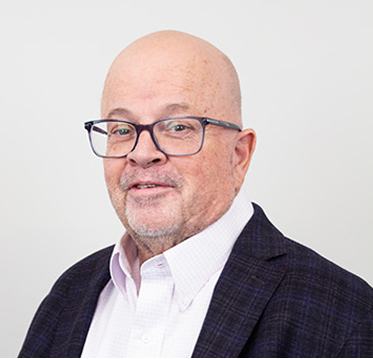
Charles R. Goulding
President
Charles R. Goulding is an Attorney/CPA, President and founder of Energy Tax Savers/R&D Tax Savers, two divisions of a national tax consulting firm. Previously, he was a Managing Director at Cooper Industries Inc. (now Eaton) in Houston, Texas. Before joining Cooper, Mr. Goulding was a vice president of Dover Corporation, an eight billion dollar sales NYSE diversified industrial manufacturer. At both companies, Mr. Goulding created and administered company-wide R&D Tax Credit programs. These programs encompassed both domestic and international business operations and have helped generate over $600 million in tax savings for their respective firms. Mr. Goulding has been at the forefront of R&D Tax Credit work since the credit’s inception in 1981.
Mr. Goulding has a law degree from Brooklyn Law School (Juris Doctor) and an MBA from Adelphi University. Mr. Goulding also participated in Pace University’s Doctor of Business Administration Program. His undergraduate degree is from the State University of New York at Stony Brook where he was a double major in Political Science and Economics. He spent his junior year abroad at the University of Copenhagen, Denmark.
Mr. Goulding is a former President of the New York Chapter of the Tax Executives Institute and also participated in Pace University’s Doctor of Business Administration Program. He has served as the co-chairman of the Taxation of Mergers and Acquisition conferences in Chicago, Houston, New York City, San Francisco and Paris, France. He recently chaired New York’s Solar Investment Conference.
He has authored over 800 articles for numerous tax publications including International Business, International Tax Journal, Euromoney, Taxation for Accountants, The Practical Accountant, The CPA Journal, and Corporate Business Taxation Monthly.
Mr. Goulding successfully litigated the Dover Corporation case in U.S. Tax Court (the first check the box case) and the Pulsar International case on reasonable compensation. He is also the Mayor of the Village of Oyster Bay Cove, New York
Charles R. Goulding
President
Charles R. Goulding is an Attorney/CPA, President and founder of Energy Tax Savers/R&D Tax Savers, two divisions of a national tax consulting firm. Previously, he was a Managing Director at Cooper Industries Inc. (now Eaton) in Houston, Texas. Before joining Cooper, Mr. Goulding was a vice president of Dover Corporation, an eight billion dollar sales NYSE diversified industrial manufacturer. At both companies, Mr. Goulding created and administered company-wide R&D Tax Credit programs. These programs encompassed both domestic and international business operations and have helped generate over $600 million in tax savings for their respective firms. Mr. Goulding has been at the forefront of R&D Tax Credit work since the credit’s inception in 1981.
Mr. Goulding has a law degree from Brooklyn Law School (Juris Doctor) and an MBA from Adelphi University. Mr. Goulding also participated in Pace University’s Doctor of Business Administration Program. His undergraduate degree is from the State University of New York at Stony Brook where he was a double major in Political Science and Economics. He spent his junior year abroad at the University of Copenhagen, Denmark.
Mr. Goulding is a former President of the New York Chapter of the Tax Executives Institute and also participated in Pace University’s Doctor of Business Administration Program. He has served as the co-chairman of the Taxation of Mergers and Acquisition conferences in Chicago, Houston, New York City, San Francisco and Paris, France. He recently chaired New York’s Solar Investment Conference.
He has authored over 800 articles for numerous tax publications including International Business, International Tax Journal, Euromoney, Taxation for Accountants, The Practical Accountant, The CPA Journal, and Corporate Business Taxation Monthly.
Mr. Goulding successfully litigated the Dover Corporation case in U.S. Tax Court (the first check the box case) and the Pulsar International case on reasonable compensation. He is also the Mayor of the Village of Oyster Bay Cove, New York

Jacob Goldmans
Vice President
Jacob Goldman, LEED AP, is Vice President and Chief Engineer of Energy Tax Savers/R&D Tax Savers. Since co-founding the Company in 2005, Mr. Goldman has helped secure over a billion dollars in tax deductions across 17,000+ projects. His expertise includes R&D Tax Credits and energy related incentives such as Section 179D and Investment Tax Credits under the Inflation Reduction Act (IRA).
Mr. Goldman is an award-winning speaker, distilling intricate tax codes into actionable strategies. He frequently presents at national conferences like AEE, IGSHPA, LightFair, and NFMT, as well as local chapters of USGBC, ASHRAE, IFMA, BOMA, and beyond. His most recent accolades include the 2023 AEE Northeast Regional Award for Energy Professional Development.
His thought leadership has played an integral role in advising the DOE, NEMA, and NRDC on Section 179D extensions. He has pioneered the firm’s national practice for IRA incentives, from universities leveraging solar tax credits to corporations optimizing energy efficiency deductions, Mr. Goldman’s expertise is at the cornerstone of sustainable tax strategy.
Mr. Goldman has authored over 150 articles in leading industry publications including Corporate Business Taxation Monthly, Building Operating Management, Thomson Reuters, Green Lodging News, and International Parking Institute.
With a BS in Chemical Engineering from the University of Buffalo and an MBA from the University of Maine, Mr. Goldman brings a rare blend of technical mastery and financial acumen to the complex world of tax optimization.

john
President
Charles R. Goulding is an Attorney/CPA, President and founder of Energy Tax Savers/R&D Tax Savers, two divisions of a national tax consulting firm. Previously, he was a Managing Director at Cooper Industries Inc. (now Eaton) in Houston, Texas. Before joining Cooper, Mr. Goulding was a vice president of Dover Corporation, an eight billion dollar sales NYSE diversified industrial manufacturer. At both companies, Mr. Goulding created and administered company-wide R&D Tax Credit programs. These programs encompassed both domestic and international business operations and have helped generate over $600 million in tax savings for their respective firms. Mr. Goulding has been at the forefront of R&D Tax Credit work since the credit’s inception in 1981.
Mr. Goulding has a law degree from Brooklyn Law School (Juris Doctor) and an MBA from Adelphi University. Mr. Goulding also participated in Pace University’s Doctor of Business Administration Program. His undergraduate degree is from the State University of New York at Stony Brook where he was a double major in Political Science and Economics. He spent his junior year abroad at the University of Copenhagen, Denmark.
Mr. Goulding is a former President of the New York Chapter of the Tax Executives Institute and also participated in Pace University’s Doctor of Business Administration Program. He has served as the co-chairman of the Taxation of Mergers and Acquisition conferences in Chicago, Houston, New York City, San Francisco and Paris, France. He recently chaired New York’s Solar Investment Conference.
He has authored over 800 articles for numerous tax publications including International Business, International Tax Journal, Euromoney, Taxation for Accountants, The Practical Accountant, The CPA Journal, and Corporate Business Taxation Monthly.
Mr. Goulding successfully litigated the Dover Corporation case in U.S. Tax Court (the first check the box case) and the Pulsar International case on reasonable compensation. He is also the Mayor of the Village of Oyster Bay Cove, New York

Raymond Kumar
Director
Raymond Kumar is a CPA and Director with Energy Tax Savers/R&D Tax Savers. He joined the firm in 2008 and brings with him Big4 accounting firm experience, where he helped secure specialty tax incentives for Fortune 500 automakers, defense contractors, and consumer goods manufacturers. His tax expertise includes Section 179D incentives and R&D Tax Credits which he has specialized in his entire professional career.
Mr. Kumar plays a key role in managing of the firm’s national Section 179D practice, working closely with clients and partners to identify and quantify tax savings. He is involved in every step of the process to ensure project success.
Mr. Kumar is a frequent author and presenter on tax incentives and has presented at the Human Centric Sustainability Event at Yankee Stadium, Energize Long Island conference, and the NYS Society of Professional Engineers Annual Conference. He has numerous published articles covering tax incentives, featured in Retrofit Magazine, Corporate Business Taxation Monthly, and FacilitiesNet.
Mr. Kumar holds a BBA in Accounting from Adelphi University and an MBA from NYU Stern School of Business. Mr. Kumar is a Certified Public Accountant (CPA), licensed to practice in New York.

Andrea Albanese
Director
Andrea Albanese is a Director with Energy Tax Savers/R&D Tax Savers. She joined the firm in 2010 and has played a key role in establishing and growing the firm’s national R&D Tax Credit practice. She oversees R&D Tax Credits and client relationships across a variety of industries including software, manufacturing, distribution, architecture and engineering, food and beverage, and aerospace/defense.
Ms. Albanese specializes in helping clients and CPAs identify, quantify, and maximize R&D Tax Credit benefits. She has helped secure tax credits for businesses ranging from start-ups to Fortune 500 companies, in both the public and private sectors. Her recent projects include a large e-commerce distributor, a London-based VR company, and a large manufacturer with multi-state operations. Her industry focus includes R&D Tax Credits for food and beverage production.
Her tax incentive expertise includes obtaining payroll R&D Tax Credits for start-ups as well helping clients obtain New York State refundable life science credits. She has numerous published articles covering tax incentives in leading tax publications such as Thomson Reuters and CCH’s Corporate Business Taxation Monthly.
Ms. Albanese holds a BS in Technology Studies from SUNY Farmingdale.

Lara Tomiko
Senior Tax Analyst
Lara Tomiko is a Senior Tax Analyst with Energy Tax Savers/R&D Tax Savers. She joined the firm in 2016 and has been involved with R&D Tax Credit studies across various industries, including architecture/engineering, food and beverage, renewable energy, horticulture, and control systems engineering.
Since the passage of the Inflation Reduction Act (IRA), Ms. Tomiko has managed numerous IRA tax projects, securing tax credits for solar, battery, geothermal, EV, and EV charging station installations. She has secured dozens of Elective Pay Inflation Reduction Act (IRA) incentives for K-12 schools, municipalities, non-profits, colleges/universities, as well as religious institutions. Ms. Tomiko also specializes in obtaining the Low-Income Communities Bonus Credit Program, helping clients maximize their benefits under the IRA.
Ms. Tomiko’s expertise also includes Section 179D deductions, helping leading energy service companies obtain tax incentives for energy efficient design.
Ms. Tomiko holds a BA in Sustainability Studies from Stony Brook University.

Ryan Donley
Senior Tax Analyst
Ryan Donley is a Senior Tax Analyst with Energy Tax Savers/R&D Tax Savers. He has been with the firm since 2017, managing R&D Tax Credit Studies and partner relationships for a variety of industries including software, beer and wine, machine shops, construction, glass, and managed IT.
Mr. Donley manages R&D Tax Credits for various Manufacturing Extension Partnerships (MEP) including the New York City and New Jersey regions. His tax incentive expertise includes obtaining payroll R&D credits for start-up companies and the beer and wine industry, ranging from craft beverages to large scale producers. Mr. Donely has presented on the utilization of R&D tax incentives for start-up companies and most recently he presented at the Pennsylvania Brewing Symposium.
Mr. Donley holds a BS in Business Administration from SUNY Farmingdale.

Preeti Sulibhavi
CPA
Preeti Sulibhavi is a CPA with Energy Tax Savers/R&D Tax Savers. She has been with the firm since 2018 and has handled R&D Tax Credits for companies in a wide range of industries including food and beverage, software, and life sciences. Ms. Sulibhavi has co-authored numerous articles on specialty tax incentives for publications such as Fabbaloo, a leading 3D printing blog.
In addition to business and personal income taxes, Ms. Sulibhavi handles IRS Form 990-T filings and related schedules for non-profit/government entities seeking to claim Elective Pay benefits under the Inflation Reduction Act (IRA).
Ms. Sulibhavi is a licensed Certified Public Accountant in the State of New York. Ms. Sulibhavi holds a BA in Economics with a Minor in Biology from Wellesley College and an MBA in Accounting from Hofstra University, Zarb School of Business.

Peter Saenz
Engineer
Peter Saenz is an Engineer with Energy Tax Savers/R&D Tax Savers. He has been with the firm since 2015 and handles R&D Tax Credit studies across various industries, including dental/ medical, biotechnology, machine shops, construction, woodworking, and software design. He brings with him direct experience in robotic process automation, digital transformation, data analytics, and software development.
Mr. Saenz is pursuing his doctorate at Stony Brook University where he researches AI adoption. He holds an MS in Biomedical Engineering from Stony Brook University, along with an Advanced Graduate Certificate in Life Science Innovation & Entrepreneurship. He received his BS in Business Management from SUNY Farmingdale.
His past doctoral research focused on life sciences, specifically in spatial transcriptomics, diagnostics, and microfluidics. He has worked with numerous companies to secure biological innovation-based R&D Tax Credits. Additionally, he has experience in developing Large Language Models and enjoys working with AI clients to maximize their R&D Tax Credits.
Mr. Saenz has co-authored numerous articles on the R&D Tax Credit spanning technological innovation, business, and policy.

Mellissa McIntyre
Senior Tax Analyst
Mellissa McIntyre is a Senior Tax Analyst and Engineer with Energy Tax Savers/R&D Tax Savers. She has been with the firm since 2018, focusing on R&D Tax Credit strategies across various industries with a strong focus in architecture, engineering, and life sciences. Ms. McIntyre works with clients to optimize their time-keeping strategies, helping them capture and document qualifying activities more efficiently. Her recent projects include a leading lighting & controls manufacturer, an electronic device manufacturer, and a cosmetics formulation company.
She has extensive experience with federal and state R&D Tax Credit processes throughout New England, where she works with numerous clients to help them take advantage of region-specific R&D tax incentives. Ms. McIntyre has participated in Washington, DC fly-ins to advocate for the R&D Tax Credit program and its importance to American innovation.
Ms. McIntyre holds a BS in Biomedical Engineering from Stony Brook University, with a focus in bioimaging and bioelectricity.

Warren Buzzell Jr.
Engineer
Warren Buzzell Jr. is an Engineer with Energy Tax Savers/R&D Tax Savers. Mr. Buzzell joined the firm in 2020 and has managed with R&D Tax Credit studies in various industries, including manufacturing, software development, architecture/engineering, life science, and lighting.
Mr. Buzzell holds a BS in Manufacturing Engineering from Robert Morris University and an MS in Biomedical Engineering from Stony Brook University. In addition to his engineering background, Mr. Buzzell is also a certified Project Management Professional.
Mr. Buzzell’s experience prior to joining the firm includes working with additive and subtractive manufacturing, automotive glass manufacturing, preclinical studies, and graduate research.
Mr. Buzzell is the co-author of a number of articles on R&D Tax Credits for the additive manufacturing industry, including “3D Printing Technology’s Potential in Traumatic Brain Injury Research”, “The Future of Biomanufacturing: Machine Learning, Automation, and 3D Printing’s Role”, and “3D Printing for Quality Assurance: A Closer Look at Aerospace Component Inspection Protocols”.

Matthew Selman
Engineer
Matthew Selman is an Engineer with Energy Tax Savers/R&D Tax Savers. He joined the firm in 2022 and brings with him an industrial engineering background in manufacturing and logistics.
Mr. Selman manages Elective Pay Inflation Reduction Act (IRA) incentives for various energy technologies, including solar, geothermal, thermal storage, and EV charging. He also handles Section 179D deductions for building owners and for designers of all categories of government buildings including federal, state, local, and K-12 public schools. While at the firm, Mr. Selman has been involved with R&D Tax Credit studies with a focus on the manufacturing sector.
Mr. Selman holds a BS in Industrial & Systems Engineering with a Minor in Green Engineering from Virginia Polytechnic Institute.

Valentina Alzate
Engineer
Valentina Alzate is an Engineer at Energy Tax Savers/R&D Tax Savers. She joined the firm in 2022 and brings experience and knowledge of full-stack software development and data analytics to support client projects across various industries.
Ms. Alzate manages R&D Tax Credit studies with an industry focus on software development, data analytics, and machine learning. She also manages tax credits for clients across multiple sectors including engineering firms and logistics/distribution. Ms. Alzate’s recent projects include securing R&D Credits for a global marketing solutions provider, leading wholesale foodservice provider, and financial software company.
Ms. Alzate holds a BS in Computer Science from Johns Hopkins University.

Andressa Bonafé -Pontes
Senior Tax Analyst
Andressa Bonafé-Pontes is a Senior Tax Analyst with Energy Tax Savers/R&D Tax Savers. She joined the firm in 2012 and has been involved with R&D Tax Credit studies in various industries, including life sciences, software development, artificial intelligence, and architecture/engineering.
Ms. Bonafé-Pontes has co-authored numerous articles on R&D Tax Credits with a focus on life sciences, 3D printing, and software development, including “The R&D Tax Credit Aspects of AI Vision Technology”, “Emotion-Recognition Technology”, and “The R&D Tax Credit Aspects of Cyber Security Start-Ups”, among many others.
Ms. Bonafé-Pontes holds an MS in International Economic Policy from the Paris Institute of Political Sciences, an MS in Behavioral Sciences from the University of Brasilia, and a PhD in Social Psychology from the University of Brasilia.

Leah Nabangi
Engineer
Leah Nabangi is an Engineer with Energy Tax Savers/R&D Tax Savers and has been with the firm since 2023. While at the firm, Ms. Nabangi has been involved with R&D Tax Credit studies across various industries including architecture/engineering, food/beverage, electrical engineering, and software development. Ms. Nabangi has experience in various topics such as sustainability and development, data analytics, and machine learning.
Ms. Nabangi holds a BS in Applied Mathematics and Statistics with a double major in Technological Systems Management from Stony Brook University.
Nimra Shakoor
Engineer
Nimra Shakoor is an Engineer with Energy Tax Savers/R&D Tax Savers. Ms. Shakoor graduated from Cornell University with a BS in Environmental Engineering and an MS in Operations Research and Information Engineering. Her focus includes the intersection of environmental sustainability and data science. Since joining the firm, Ms. Shakoor has contributed to R&D Tax Credit studies in warehouse automation and software development. Ms. Shakoor has co-authored numerous articles on the R&D Tax Credit as it relates to college consolidations and additive manufacturing.
Anthony Palumbo
Engineer
Anthony Palumbo is an Engineer with Energy Tax Savers/R&D Tax Savers. Mr. Palumbo holds a BS and MS in Biomedical Engineering from Binghamton University. His graduate research focused on translational biophotonics and computational optical bioimaging, while his undergraduate work emphasized biomedical devices and instrumentation, biopharmaceutical technology, and biomaterials. Since joining the firm, Mr. Palumbo has contributed to R&D Tax Credit studies across various industries including robotics, warehouse automation, and software development. Mr. Palumbo has co-authored numerous articles on the R&D Tax Credit, exploring the intersection of additive manufacturing with developments in AI, industrial policy, and domestic materials sourcing.
Michael Horwitz
Tax Analyst
Michael Horwitz is a Tax Analyst with Energy Tax Savers/R&D Tax Savers. Mr. Horwitz holds a BS in Electrical Engineering from Washington University in St. Louis. Michael specializes in EPAct Section 179D studies, working closely with clients and partners to identify and quantify tax savings relating to energy efficient design.